算法流程图
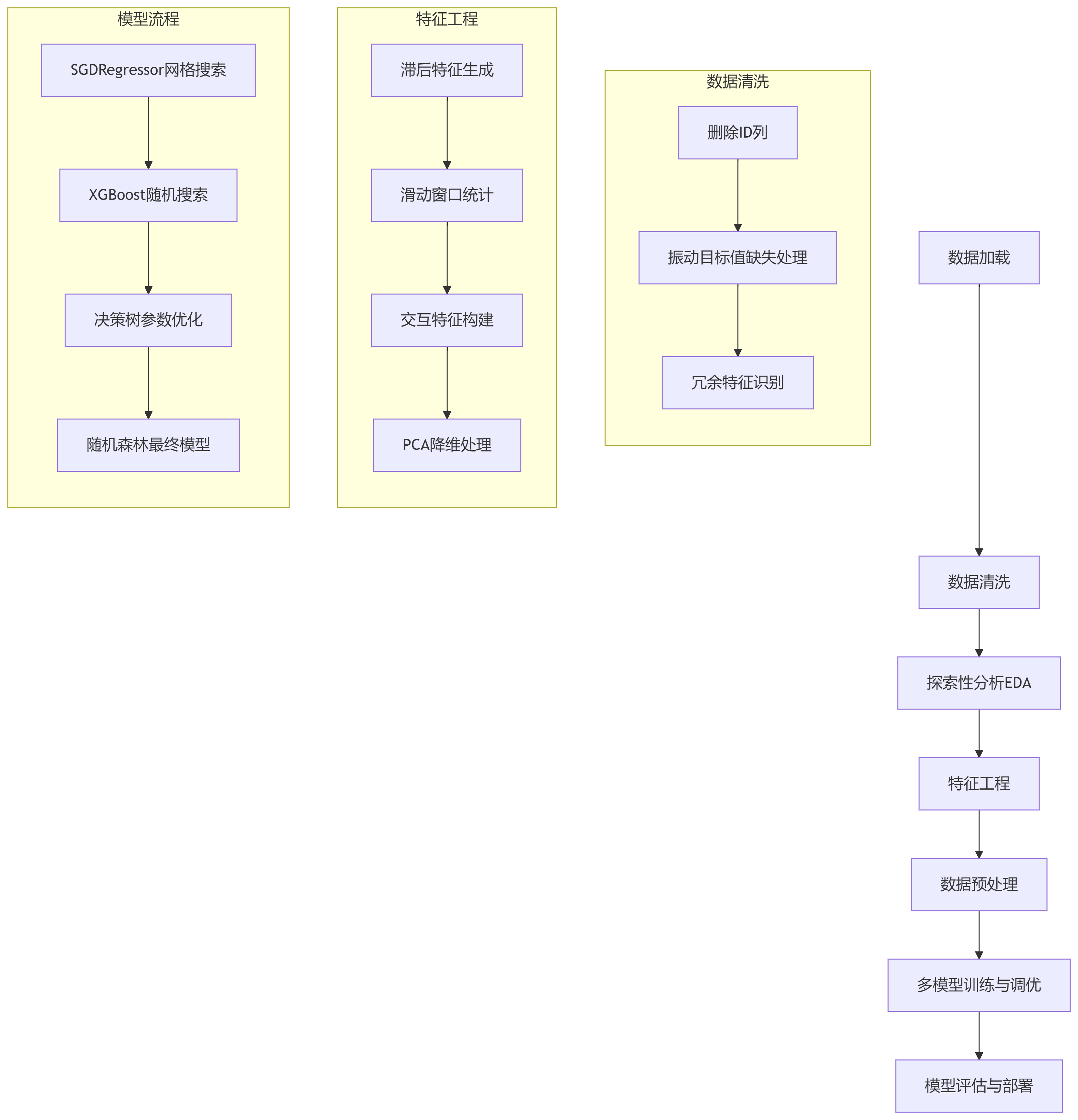
详细实现步骤解析
1. 数据特征深度解析
# 输入数据结构示例
{
    "timestamp": "2023-01-01 16:30:00",  # 4Hz采样
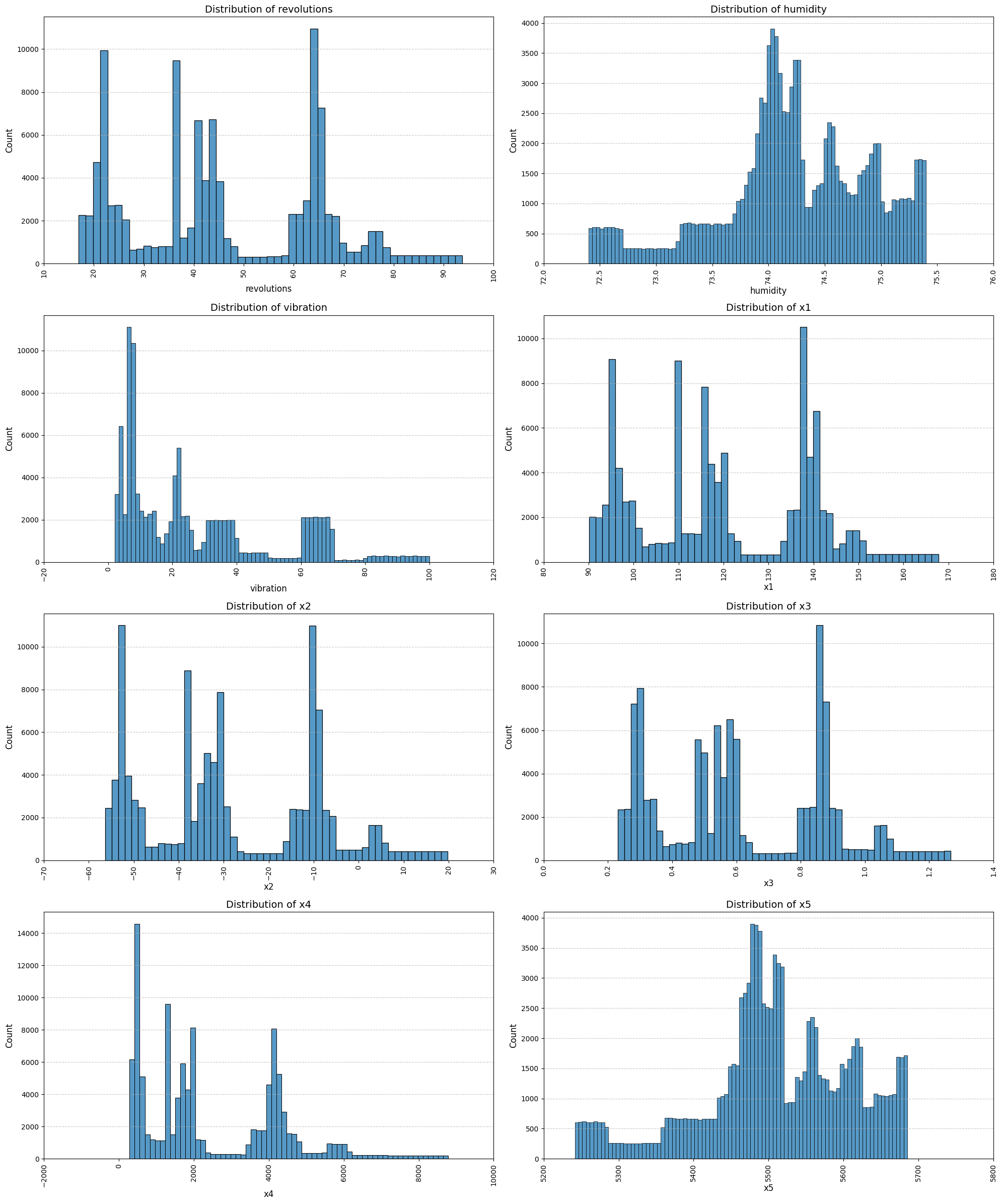
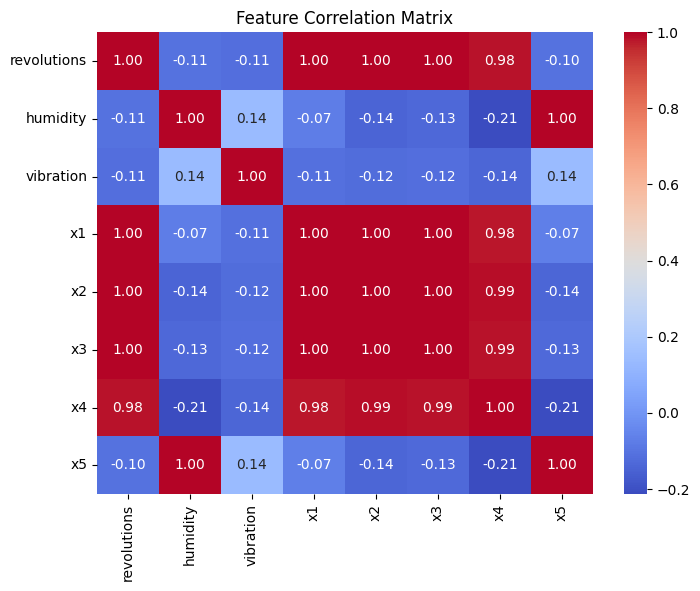
    "revolutions": 1520,                 # 电机转速(与x1-x4强相关)
    "humidity": 62.3,                    # 湿度(与x5完全共线性)
    "x1": 0.87, "x2": 1.02, "x3": 0.93,  # 机电传感器组
    "x4": 1.15, "x5": 62.3,              # 物理传感器
    "vibration": 4.78                    # 目标值(单位:mm/s²)
}
2. 关键特征工程实现
# 滞后特征(捕捉时序依赖)
df["vibration_lag_1"] = df["vibration"].shift(1)  # 前1秒振动状态
df["vibration_lag_2"] = df["vibration"].shift(2)  # 前2秒振动状态


# 动态窗口统计(平滑噪声)
df["rolling_vibration"] = df["vibration"].rolling(10).mean()  # 2.5秒窗口均值
df["ema_vibration"] = df["vibration"].ewm(span=10).mean()     # 指数衰减加权


# 交互特征(物理规律建模)
df["humidity_x5"] = df["humidity"] * df["x5"]  # 湿度-传感器协同效应


# PCA降维(处理x1-x4强相关)
pca = PCA(n_components=2)
df[["PCA1", "PCA2"]] = pca.fit_transform(df[["x1","x2","x3","x4"]])
3. 模型优化核心技术
# 随机森林超参数空间
param_dist = {
    'n_estimators': [50, 150, 250],      # 树的数量
    'max_depth': [None, 15, 30],         # 树深度控制
    'min_samples_split': [2, 5],         # 节点分裂最小样本
    'min_samples_leaf': [1, 2],          # 叶节点最小样本
    'max_features': ['sqrt', 0.8]        # 特征采样比例
}


# 贝叶斯优化实现
opt = BayesianOptimization(
    estimator=RandomForestRegressor(),
    search_spaces=param_dist,
    cv=5,
    n_iter=50,
    scoring='neg_mean_squared_error'
所用模块
import numpy as np
import pandas as pd
import matplotlib.pyplot as plt
import seaborn as sns


from sklearn.impute import SimpleImputer
from sklearn.model_selection import train_test_split,GridSearchCV,RandomizedSearchCV,learning_curve,cross_val_score
from sklearn.preprocessing import StandardScaler
from sklearn.pipeline import make_pipeline
from sklearn.compose import ColumnTransformer
from sklearn.linear_model import SGDRegressor
from sklearn.tree import DecisionTreeRegressor
from sklearn.ensemble import RandomForestRegressor
from sklearn.decomposition import PCA
import xgboost as xgb


import warnings
warnings.filterwarnings('ignore')
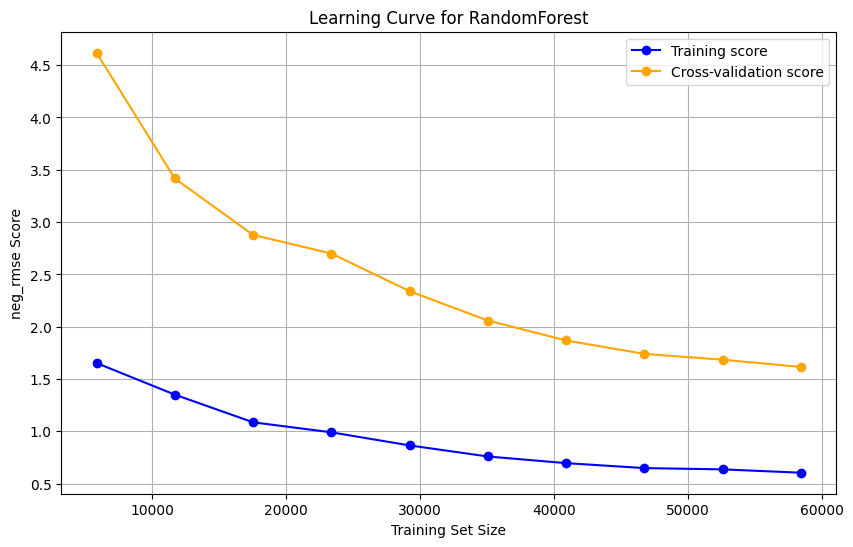
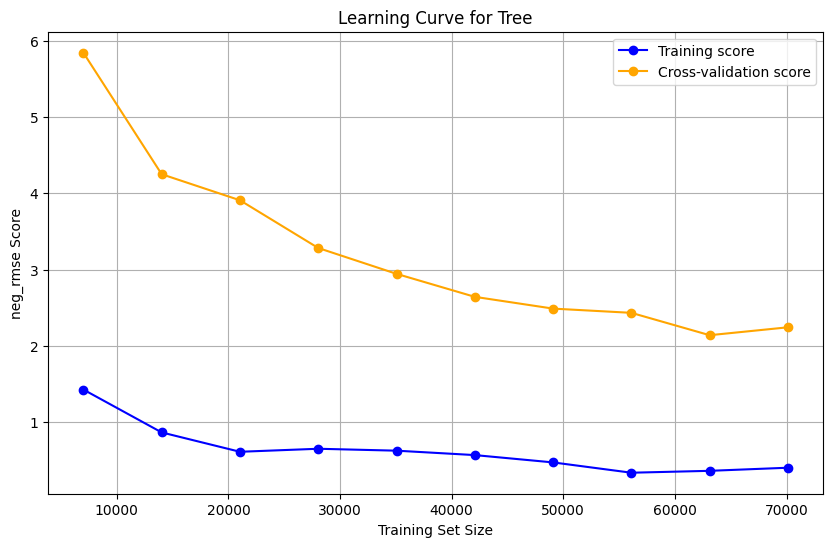
1.所有代码均经过运行测试,没有问题。
2.拍前请仔细阅读作品简介,这非常重要,因为涉及到不同的编程语言(Python或matlab)。
3.程序为特殊商品,经售出不退,有问题请及时联系。
4.建议有一定Python或Matlab基础的同学或工程师购买。
5.该代码不讲解哦。